What Is AI-Powered Property Management?
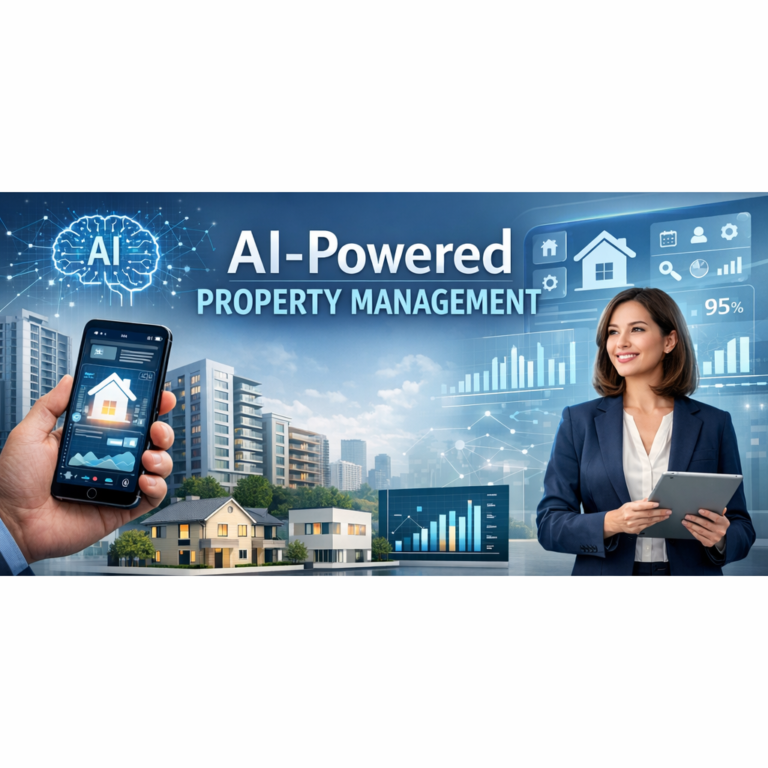
AI-powered property management refers to the use of artificial intelligence technologies to automate, streamline, and improve day-to-day real estate operations. From tenant communication and maintenance coordination to rent collection and predictive analytics, AI helps property managers work faster, reduce errors, and deliver a better rental experience.
As the property management industry becomes more competitive, companies are turning to smart tools to save time, lower costs, and make data-driven decisions. AI is no longer a future concept; it is already reshaping how residential and commercial properties are managed.
Why AI Is Becoming Essential in Property Management
Managing properties involves repetitive tasks, large amounts of data, and constant communication with tenants, owners, vendors, and contractors. AI can handle many of these processes automatically, allowing teams to focus on higher-value work.
Improved Efficiency
AI tools can automate scheduling, respond to common tenant questions, and organize work orders without constant human intervention. This reduces administrative workload and speeds up service delivery.
Better Tenant Experience
Tenants expect quick responses and seamless support. AI chatbots, smart portals, and predictive maintenance alerts help property managers respond faster and provide a more modern rental experience.
Smarter Decision-Making
AI systems can analyze rental trends, occupancy data, maintenance history, and market conditions to help property managers make informed decisions about pricing, budgeting, and asset performance.
Key Benefits of AI-Powered Property Management
1. Automated Tenant Communication
AI chatbots and virtual assistants can answer frequently asked questions, handle basic support requests, and guide tenants through routine processes such as lease inquiries, payment details, and maintenance reporting.
2. Predictive Maintenance
Instead of waiting for equipment to fail, AI can analyze usage patterns and historical data to predict when repairs or servicing may be needed. This helps reduce costly emergency repairs and extends the life of building systems.
3. Faster Lease Management
AI can assist with document processing, lease abstraction, application screening, and renewal reminders. This helps property managers reduce manual paperwork and improve organizational accuracy.
4. Dynamic Rent Pricing
AI can evaluate market demand, seasonal changes, vacancy rates, and comparable properties to recommend competitive rental pricing. This can help maximize revenue while maintaining occupancy.
5. Improved Tenant Screening
AI-driven screening tools can quickly analyze applications and identify patterns in financial and rental history. This supports faster decision-making while helping reduce risk.
How AI Is Used in Day-to-Day Property Operations
Maintenance Requests and Work Order Routing
AI can categorize maintenance requests, prioritize urgent issues, and assign tasks to the right vendor or in-house technician. This shortens response times and improves operational coordination.
Lease and Document Automation
Natural language processing tools can scan contracts, extract key terms, and flag missing information. Property teams can use this to reduce manual review time and improve compliance.
Tenant Support and Chatbots
AI chatbots provide 24/7 support for common questions about rent, amenities, parking, payments, and lease terms. This ensures tenants receive immediate assistance even outside business hours.
Occupancy and Portfolio Analytics
AI-powered dashboards can identify patterns across multiple properties, showing occupancy trends, churn risks, and income performance. Owners and managers can use these insights to improve portfolio strategy.
Challenges of Implementing AI in Property Management
While AI offers major advantages, implementation requires careful planning. Property managers should consider data quality, system integration, privacy concerns, and staff training before adopting new tools.
Data Accuracy
AI systems are only as reliable as the data they receive. Incomplete or outdated records can lead to poor recommendations or incorrect automation results.
Integration With Existing Systems
Many property management companies already use software for accounting, leasing, and maintenance. New AI tools must integrate smoothly to avoid workflow disruptions.
Privacy and Security
Property managers handle sensitive tenant and financial information. AI platforms must follow strong security practices and comply with relevant privacy regulations.
Training and Adoption
Employees need to understand how to use AI tools effectively. Without proper training, teams may underuse the technology or rely on it incorrectly.
Best Practices for Adopting AI-Powered Property Management
Start With High-Impact Tasks
It is often best to begin with one or two functions, such as tenant communication or maintenance automation. This allows teams to measure results before expanding to additional use cases.
Choose Scalable Software
Select platforms that can grow with your portfolio and adapt to changing operational needs. Look for tools that offer automation, analytics, and easy system integration.
Monitor Performance
Track key metrics such as response times, tenant satisfaction, vacancy rates, and maintenance costs to determine whether AI adoption is delivering measurable value.
Keep the Human Element
AI should support property managers, not replace them. Complex tenant issues, relationship management, and strategic decisions still require human judgment and empathy.
The Future of AI in Property Management
The future of AI-powered property management will likely include more intelligent automation, deeper analytics, and stronger predictive capabilities. As technology improves, property managers will be able to forecast maintenance needs more accurately, personalize tenant experiences, and operate more efficiently at scale.
We can also expect AI to become more common in smart building systems, energy management, fraud detection, and investment analysis. Property management firms that adopt AI early may gain a lasting competitive advantage through better service and stronger operational performance.
Conclusion
AI-powered property management is changing how real estate professionals handle leasing, maintenance, communication, and portfolio oversight. By automating repetitive tasks and uncovering valuable insights, AI helps property managers save time, reduce costs, and improve tenant satisfaction. For companies looking to stay competitive in a fast-moving market, adopting AI is becoming less of an option and more of a necessity.