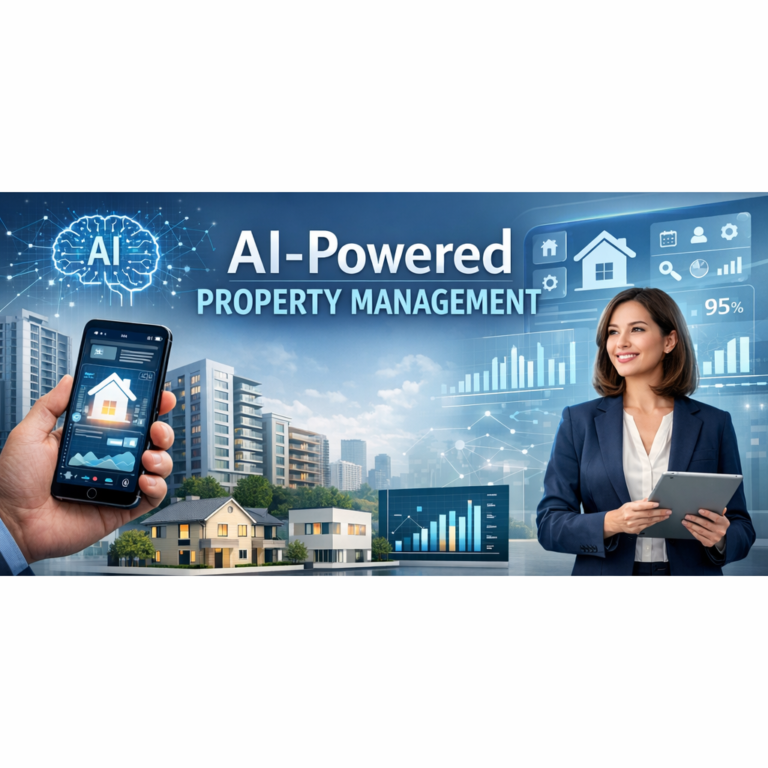
What Is AI-Powered Property Management?
AI-powered property management refers to the use of artificial intelligence tools and automation to streamline day-to-day real estate operations, improve tenant experiences, and support smarter decision-making. From leasing and maintenance to rent collection and predictive analytics, AI is helping property managers work faster, reduce costs, and deliver better service.
As the real estate industry becomes more competitive and data-driven, AI-powered property management is quickly moving from a nice-to-have to a strategic advantage.
Why AI Is Changing Property Management
Traditional property management often involves repetitive tasks, manual communication, and reactive problem-solving. AI introduces efficiency by handling routine processes, analyzing large volumes of data, and spotting patterns that humans may miss.
This shift allows property managers to spend less time on administrative work and more time on tenant relationships, asset growth, and long-term planning.
Key Benefits of AI in Property Management
- Faster response times for tenants and owners
- Reduced operational costs through automation
- Better tenant screening and risk assessment
- More accurate maintenance forecasting
- Improved rent collection and payment tracking
- Smarter pricing and occupancy decisions
Core Applications of AI-Powered Property Management
AI can be applied across nearly every stage of the property lifecycle. Whether managing residential, commercial, or mixed-use assets, property managers can use AI to improve efficiency and performance.
1. Tenant Screening and Leasing
AI tools can analyze rental applications, credit history, income patterns, and other risk indicators to help property managers make faster and more informed leasing decisions. Automated screening reduces human error and speeds up the approval process.
Chatbots and virtual assistants can also answer inquiries, schedule property tours, and guide prospects through the application process 24/7.
2. Predictive Maintenance
One of the most valuable uses of AI-powered property management is predictive maintenance. By analyzing sensor data, service records, and equipment performance, AI can identify potential issues before they become costly repairs.
This proactive approach helps reduce downtime, extend the life of assets, and improve tenant satisfaction by preventing unexpected disruptions.
3. Rent Collection and Payment Optimization
AI can automate invoice reminders, detect late-payment patterns, and recommend tailored communication strategies to improve collections. Some systems also use machine learning to predict payment delays and help managers intervene earlier.
This creates a more consistent cash flow while reducing the time spent on manual follow-ups.
4. Tenant Communication and Support
AI-driven chatbots and virtual assistants can handle common tenant questions about rent, maintenance, lease terms, and community policies. These tools provide instant support, even outside office hours.
By improving responsiveness, AI helps create a more convenient and satisfying rental experience.
5. Data-Driven Pricing and Occupancy Insights
Artificial intelligence can analyze market trends, vacancy rates, seasonal demand, and competitor pricing to recommend optimal rental rates. This helps property managers balance occupancy and revenue more effectively.
AI-powered analytics can also reveal which units or amenities are most attractive to tenants, supporting better marketing and investment decisions.
How AI Improves Efficiency for Property Managers
Efficiency is one of the biggest advantages of AI-powered property management. Automation reduces the burden of repetitive tasks such as responding to inquiries, logging maintenance requests, and sending reminders.
With AI handling these tasks, teams can operate leaner without sacrificing service quality. This is especially valuable for managers overseeing large portfolios or properties spread across multiple locations.
Examples of Time-Saving AI Automations
- Auto-responding to common tenant questions
- Sorting and prioritizing maintenance requests
- Generating lease renewal reminders
- Flagging suspicious payment activity
- Creating reports from property performance data
AI-Powered Property Management and Tenant Experience
Tenant satisfaction plays a major role in retention, reputation, and long-term profitability. AI improves the tenant experience by making communication faster, services more accessible, and issue resolution more efficient.
For example, a tenant can submit a maintenance request through a digital assistant and receive real-time updates as the issue is assigned and resolved. This level of transparency helps build trust and reduces frustration.
Personalized Service at Scale
AI also makes it possible to personalize interactions at scale. Systems can track tenant preferences, communication history, and behavior to deliver more relevant messaging and support. This creates a more responsive and modern property management experience.
Challenges and Considerations
Although AI offers major benefits, it is not without challenges. Property managers must consider data privacy, system accuracy, implementation costs, and the need for human oversight.
AI should support decision-making, not replace it entirely. Lease approvals, dispute resolution, and sensitive tenant matters still require human judgment and empathy.
Important Questions Before Adopting AI
- Is the platform secure and compliant with data regulations?
- Does it integrate with existing property management software?
- How accurate are its predictions and recommendations?
- Will staff need training to use the system effectively?
- Does it improve both workflow and tenant outcomes?
The Future of AI-Powered Property Management
The future of property management will likely be more automated, more predictive, and more connected. As AI technology continues to evolve, property managers can expect smarter tools for everything from lease administration to asset forecasting.
Emerging innovations may include voice-activated tenant support, advanced energy optimization, intelligent building systems, and deeper integration between AI, IoT, and property management platforms.
Organizations that adopt AI early may gain a significant competitive edge through lower operating costs, stronger tenant retention, and better portfolio performance.
Conclusion
AI-powered property management is reshaping how real estate professionals operate. By automating routine tasks, improving communication, and enabling data-driven decisions, AI helps property managers deliver better results with greater efficiency.
For property owners and managers looking to stay competitive, embracing AI is no longer just about innovation. It is about building a smarter, more scalable, and more responsive management model for the future.