
Introduction
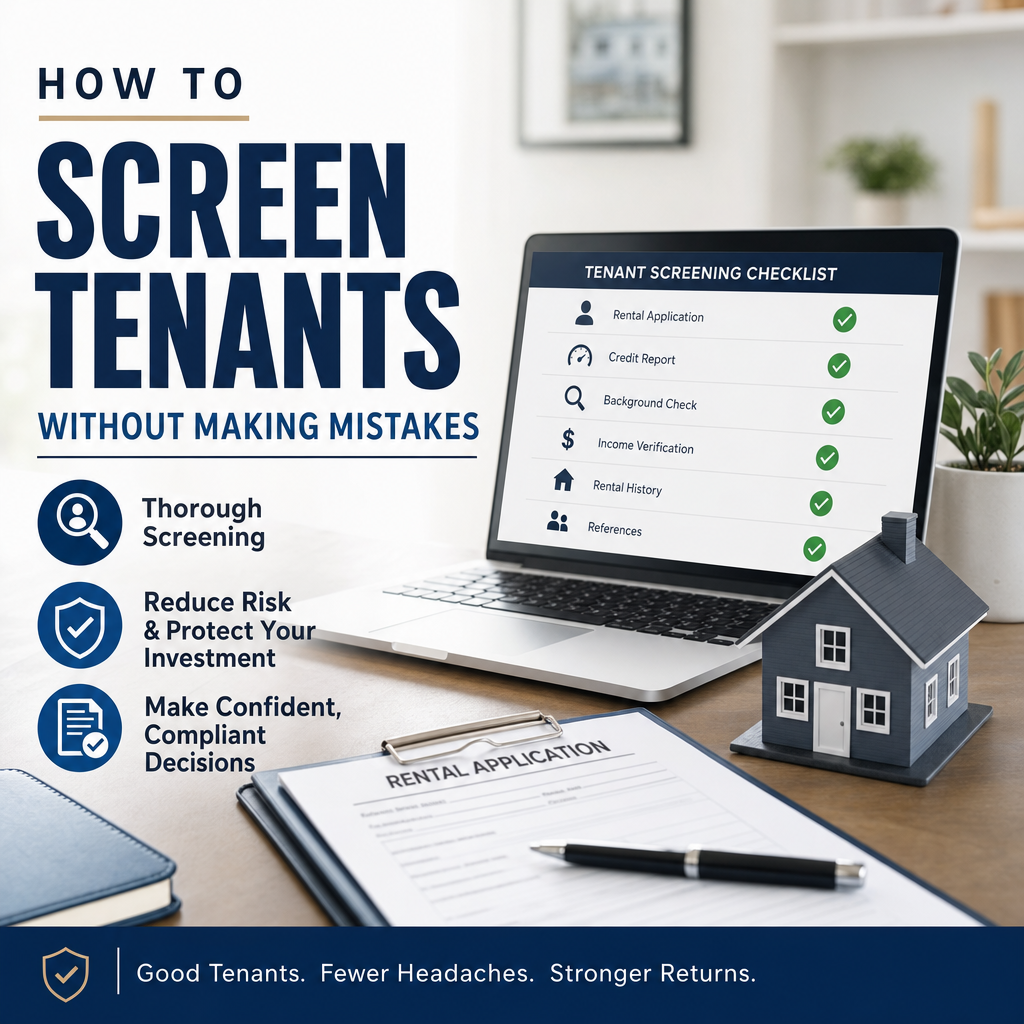
Finding reliable tenants is crucial for maintaining a profitable and hassle-free rental property. A thorough screening process helps you avoid late payments, property damage, and legal headaches. In this guide, you’ll learn step-by-step how to screen tenants without making mistakes.
Understand Legal Requirements
Fair Housing Laws
Familiarize yourself with federal, state, and local fair housing laws. Never discriminate based on race, color, religion, sex, national origin, disability, or family status. Consistent screening criteria protect you from lawsuits and ensure a fair process.
Privacy and Background Checks
Obtain written consent before running background or credit checks. Provide an adverse action notice if you deny an application based on a background report. Keeping clear records demonstrates compliance.
Develop a Screening Process
Pre-Screening Questions
- Ask about desired move-in date and lease term.
- Confirm monthly income is at least three times the rent.
- Verify pet policies, smoking rules, and occupancy limits.
Application Form
Use a standardized application form that collects:
- Full legal name, date of birth, and Social Security number
- Current and previous addresses for the past five years
- Employment history and contact information
- References, including previous landlords
Verify Financial Stability
Income and Employment Verification
Request recent pay stubs or bank statements. Contact the employer directly to confirm position, salary, and employment dates.
Credit Report Analysis
Pull a credit report to assess payment history, outstanding debts, and overall credit score. Look for patterns of late payments or recent bankruptcies.
Check Rental History
Contact Previous Landlords
Ask about rent payment punctuality, property care, and lease compliance. Confirm there were no evictions or lease violations.
Evaluate Eviction Records
Search public records for any eviction filings. A single filing doesn’t automatically disqualify a tenant, but patterns of eviction are a red flag.
Conduct Background Checks
Criminal History
Run a criminal background check in compliance with local regulations. Focus on convictions that indicate a risk to property or other residents.
Sex Offender Registry
Verify the applicant is not listed on the national or state sex offender registry. This step ensures community safety and legal compliance.
Interview Potential Tenants
In-Person or Virtual Meet
Meet applicants to gauge reliability and communication skills. A quick walkthrough of the property can reveal how they treat the space.
Red Flags to Watch
- Inconsistent information on the application
- Refusal to provide references or consent to checks
- Unprofessional behavior or inability to meet requirements
Use Technology Wisely
Online Screening Services
Leverage reputable tenant screening platforms to automate credit, background, and eviction checks. This reduces human error and speeds up decision-making.
Tenant Screening Software
Consider property management software that integrates screening, lease signing, and rent collection. Centralized data improves accuracy and record-keeping.
Make an Informed Decision
Compare Candidates
Evaluate applicants side by side based on income, credit, rental history, and references. Use a scoring system to keep decisions objective.
Document Your Decision
Record why you approved or denied each applicant. Store application forms, consent documents, and screening reports securely for at least three years.
Conclusion: Best Practices
- Maintain consistent screening criteria for all applicants.
- Stay up to date on housing laws and regulations.
- Use clear communication and written agreements.
- Trust your research and documentation to minimize risk.
By following these steps, you’ll build a reliable tenant base and protect your investment. A thorough, legally compliant screening process is the key to mistake-free tenant selection.