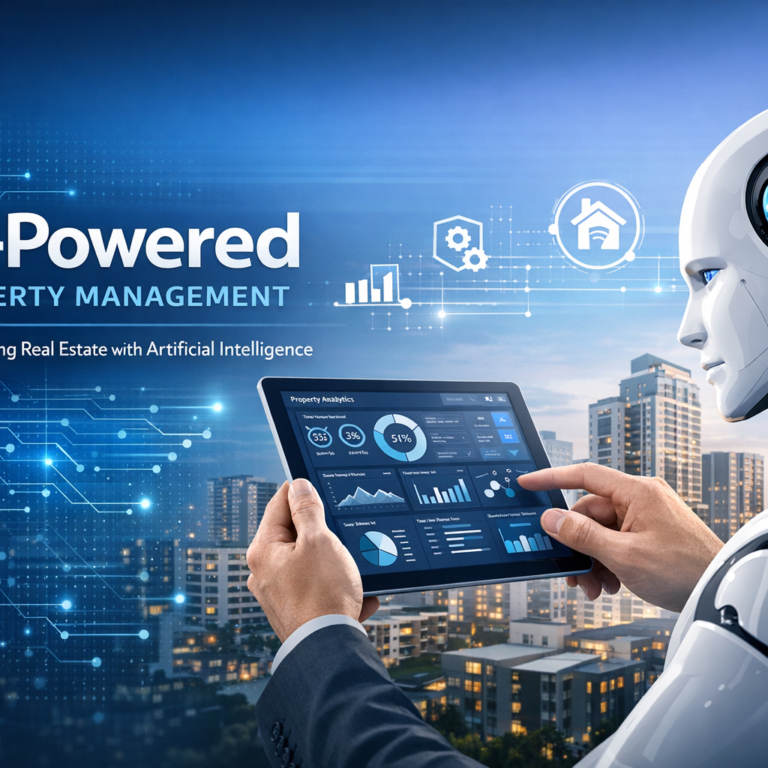
What Is AI-Powered Property Management?
AI-powered property management refers to the use of artificial intelligence tools and automation to improve how residential, commercial, and mixed-use properties are operated. Instead of relying only on manual processes, property managers can use AI to handle repetitive tasks, analyze data, improve tenant communication, and make better decisions faster.
This technology is transforming the real estate industry by helping property owners and managers save time, reduce costs, and create a better experience for tenants. From predictive maintenance to intelligent leasing, AI is quickly becoming a core part of modern property management.
Why AI Is Changing Property Management
Traditional property management often involves a large number of time-consuming responsibilities, including rent collection, maintenance scheduling, lease administration, and tenant inquiries. AI helps streamline these processes by automating routine work and providing insights that are difficult to identify manually.
As property portfolios grow, the need for efficiency becomes even more important. AI-powered property management reduces human error, improves responsiveness, and supports more accurate operational planning. This is especially valuable for property managers handling multiple units or large commercial portfolios.
Key Benefits of AI-Powered Property Management
1. Faster Tenant Communication
AI chatbots and virtual assistants can answer common tenant questions 24/7. Whether someone wants to know about payment due dates, maintenance procedures, or lease terms, AI can provide instant responses without waiting for office hours.
This improves tenant satisfaction and reduces the workload on management teams.
2. Predictive Maintenance
One of the most valuable uses of AI is predictive maintenance. By analyzing equipment performance, repair history, and sensor data, AI can identify potential issues before they become costly problems. This helps reduce emergency repairs, extend asset life, and protect property value.
3. Smarter Lease Management
AI can assist with lease tracking, renewal reminders, document review, and compliance monitoring. It can also help identify trends in tenant behavior and lease performance, allowing property managers to make more informed decisions about renewals and pricing.
4. Improved Rent Collection
Automated payment reminders and intelligent billing systems can improve rent collection rates. AI can also detect payment patterns and flag accounts that may require attention, helping managers stay proactive rather than reactive.
5. Better Data Analysis
Property managers deal with large volumes of data, including occupancy rates, maintenance costs, energy usage, and tenant preferences. AI can quickly analyze this information and generate useful insights, making it easier to optimize operations and increase profitability.
Common AI Applications in Property Management
AI Chatbots for Tenant Support
AI chatbots can respond to tenant inquiries instantly, collect service requests, and even route urgent issues to the right team. This creates a more efficient communication system and helps reduce response delays.
Automated Maintenance Ticketing
Instead of manually logging every request, AI systems can categorize maintenance issues, prioritize them based on urgency, and assign tasks to the appropriate vendor or technician.
Fraud Detection and Risk Assessment
AI can help identify suspicious applications, unusual payment behavior, and other red flags that may indicate fraud or risk. This supports better tenant screening and stronger portfolio protection.
Energy Optimization
In commercial and multifamily properties, AI can monitor energy consumption and suggest ways to reduce waste. Smart energy management features can lead to lower utility costs and more sustainable building operations.
How AI Improves the Tenant Experience
Tenant satisfaction is one of the biggest drivers of retention, and AI can play a major role in improving the overall experience. With faster communication, quicker maintenance responses, and more personalized service, tenants feel more supported and valued.
AI tools can also make it easier for tenants to access information anytime they need it. Online portals powered by intelligent automation simplify everyday tasks such as paying rent, requesting repairs, and reviewing lease documents.
Challenges of Implementing AI in Property Management
Although AI offers many benefits, implementation is not without challenges. Some property managers may face budget limitations, integration issues, or concerns about staff training. Successful adoption usually requires a clear strategy and the right technology partner.
Data privacy is another important consideration. Since property management systems often store sensitive tenant information, companies must ensure that AI tools comply with security and privacy standards.
Best Practices for Using AI in Property Management
Start with High-Impact Tasks
Begin by automating repetitive and time-intensive tasks such as screening, maintenance requests, or tenant communication. This allows teams to see value quickly without overhauling every process at once.
Choose Scalable Tools
Select AI solutions that can grow with your portfolio. Scalable platforms make it easier to expand automation as your property business develops.
Train Your Team
Even the best AI tools work better when staff understand how to use them. Training helps property managers adopt new systems confidently and use them effectively.
Monitor Performance
Track key metrics such as response times, occupancy rates, maintenance costs, and tenant satisfaction to measure whether AI is delivering real improvements.
The Future of AI in Property Management
The future of AI-powered property management is expected to include even more advanced automation, deeper predictive insights, and improved personalization. As machine learning models continue to evolve, property managers will likely gain access to better forecasting, smarter pricing tools, and more efficient workflow automation.
In the coming years, AI will not only support daily operations but also shape the strategic direction of real estate businesses. Property managers who adopt these tools early may gain a significant competitive advantage in a rapidly changing market.
Conclusion
AI-powered property management is no longer a futuristic concept. It is an increasingly practical solution for streamlining operations, improving tenant experiences, and making more informed business decisions. By embracing artificial intelligence, property managers can manage properties more efficiently and position themselves for long-term success.